How Sonrai Security turns technical wins into six-figure marketplace deals
When security teams say yes in a matter of weeks but deals stall—or even die—in procurement, your problem isn’t technical. It’s rooted in your go-to-market strategy.
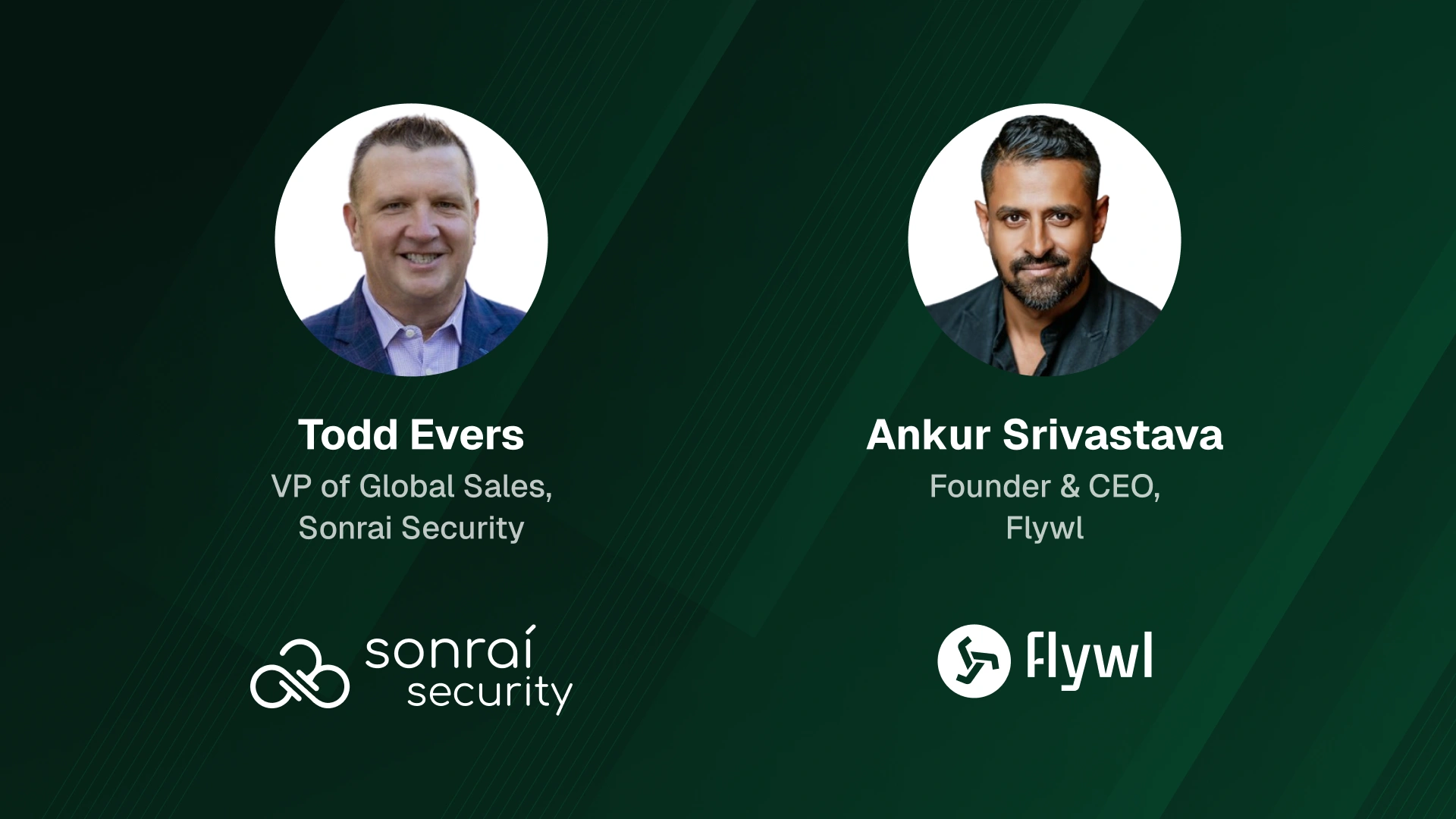
In this recent webinar, Todd Evers, VP of Global Sales at Sonrai Security, sat down with Ankur Srivastava, Founder & CEO of Flywl, to unpack the playbook Sonrai uses to turn early technical wins into repeatable, six-figure cloud marketplace deals. They share how one high-stakes, zero-budget opportunity became the catalyst for a new marketplace motion that compresses approvals, aligns CISOs and CFOs, and closes deals in days instead of months.
The core challenge: Technical “yes,” commercial “dead zone”
For ISVs, a familiar pattern routinely disrupts the sales cycle: proof of concept is successful, a prospect opts to move forward, and InfoSec signs off. It looks like everything is moving forward smoothly. Then, progress slows—or worse grinds to a halt—when finance, legal, and procurement step in.
According to Evers, this slowdown occurs not because of a problem with the software, but because of a misalignment between the CISO’s and CFO’s primary goals. When it comes to finance, they’re often out of sync on what success looks like.
Evers says the CFO is dialed into protecting the P&L. On the other hand, CISOs navigate two critical focal points beyond security: business enablement and operational efficiency.
“[CISOs] don't want security protocols to be the reason a project slows down or a developer's workflow is interrupted,” he says. “They want to protect the company while accelerating its ability to innovate in the cloud.”
When it comes to driving operational efficiency, Evers says CISOs want a “force multiplier” that “streamlines work of cloud ops, finance, and procurement teams.”
Srivastava calls this the “dead zone”: the gap between technical win and commercial close.
“Dead zone is where deals go to die in physical legal procurement, and there's optimization for that,” he says.
Sonrai’s playbook is built to bypass that dead zone.
The high-stakes deal: 260+ AWS accounts, zero budget, year-end deadline
Sonrai and Flywl’s partnership began in Q4 2025 with a high-stakes, no-budget opportunity. According to Evers, Sonrai was in a sales cycle with a global security leader with an enormous global footprint of 260+ AWS cloud accounts across multiple businesses.
“They were operating in the dark,” he says. “We’re really cloud PAM for AWS, GCP, and Azure clouds.”
Sonrai wasn’t designed to be a visibility tool, reporting tool, or dashboard. Instead, Evers calls it “an action-oriented platform that automates enforcement of least privilege.”
The company’s security team had no clear visibility on who could access its most sensitive data, and they couldn’t see the usage. As a result, they assumed everyone was a potential security risk.
“They had a very narrow window to stop the bleeding before a total company-wide shutdown at the end of the year,” Evers says.
“We showed [the prospect] how to gain total control without disrupting their business or refactoring their entire system,” says Evers, “and so we actually turned their biggest constraint—budget and an urgent timeline—into a differentiator. We proved we could deliver immediate business protection as a business enabler, securing their environment in days rather than months of manual labor from their team.”
Aside from the tight deadline, there was no budget for the project. That’s normally a deal-killer, especially for a company staring down a $150,000 project and guaranteed roadblocks to getting it funded and approved before the holidays.
Enter Flywl.
Turning “no budget” into a six-figure marketplace win
Rather than discount the work or delay the project into Q1, Sonrai partnered with Flywl to help the prospect find budget to solve the problem.
Partnering with Flywl moved the project from security to finance and procurement. Srivastava’s team identified legacy security tools that no longer delivered value and could be retired. That unlocked $150,000 of potential spend that could be repurposed.
“We shifted the conversation from a new expense to better utilization of their existing budget that they had already promised through a PPA to AWS,” Evers says. “We were able to help the CISO show the CFO that by using the Flywl model, this wasn't a budget detractor. They could hit their spend targets while gaining cloud PAM capabilities that they didn't have budget for or thought were out of reach.
“We essentially unlocked the budget by looking across their entire AWS spend, not just the security bucket. [...] And that was able to open up other funding, which allowed us to secure the deal at the end of the year.”
Procurement, initially convinced there was “no way” to get a deal done in time, changed their stance the moment Flywl entered the conversation.
“As soon as I said Flywl, the procurement lead took a step back and was like, ‘Okay, they know how to get a deal done. They know our processes. This is actually going to be a game changer.’”
According to Evers, “We turned a potential 45-day business day delay or close into 48 hours.”
The deal was inked just before the company’s hard year-end stop.
Beyond data security to operational efficiency
Sonrai and Flywl’s partnership makes CFOs strategic partners in a rollout, helping them deliver value back to their companies. While promising financial ROI can be a hard sell for security, it resonates with CFOs. It also enables finance teams to boost operational efficiency.
“We were able to get additional incentives with AWS to give the client back over $16,000 in AWS credits on day one,” Evers says. “That’s over 10% of the value of the deal returned to the CFO, right as the deal was inked.”
But the financial benefits went beyond credits. By connecting Sonrai’s automation to audit and compliance work, they showed how:
- Security and compliance audits—previously a manual, expensive nightmare—could be supported by automated reporting and enforcement
- Evidence gathering that took weeks of manual labor could become a push-button report
“If you can show a CFO that not only you’re providing an ROI and financial incentives, but you’re also securing their cloud and eliminating hundreds of hours of manual audit, you’ve moved past being a security tool and now you’ve become that business enabler for them,” Evers says.
How Sonrai’s go-to-market strategy changed
The partnership with Flywl wasn’t just a one-off victory; it fundamentally transformed Sonrai’s future go-to-market strategy. Rather than selling security in isolation, they now run a coordinated marketplace motion.
Here are a few key shifts in Sonrai’s approach:
- Marketplace-first GTM. Sonrai opted to use cloud marketplace for AWS as their primary go-to-market channel. Deals are framed around how they map to existing cloud commitments from the very start.
- Finance and procurement brought in early. As soon as a POC is in motion, Sonrai runs on two tracks:
- Field CTO drives the technical evaluation.
- Evers leads the commercial strategy.
- Partner as extension of the team. With Flywl, Sonrai started behaving like an extension of the customer’s internal team, helping CISOs, cloud ops, and finance align on both security and spend.
- Internal alignment and comp neutrality. Todd first aligned Sonrai’s executive team on a marketplace-first strategy and made marketplace deals comp-neutral for sellers so they do what’s best for the customer, not what maximizes individual commission.
This new motion is a relief for procurement teams. According to Evers, procurement prefers this motion because it gives them a clean path to “yes” using AWS Marketplace.
“Predictability is the real win here,” he says. “We're not chasing deals anymore. We've uncovered the financial hurdles and discussed them up front with the tech team and with procurement.”
The outcome: more predictable revenue, less internal friction, and a much faster, more enjoyable way to sell.
Moving past the “dead zone”
For teams stuck with deals in “dead zone” limbo, Todd and Ankur’s advice is clear:
- Don’t wait until the POC is over to figure out funding. As soon as a POC starts, start working with your champion on how the deal will be funded, not just why the tech is needed.
- Treat cloud marketplaces as strategic GTM channels. They’re not just transactional tools; they unlock incredible efficiency.
- Seed smaller deals early. Even smaller customers benefit from operational efficiency, and those early wins roll up into larger enterprise commits that make renewals and expansions easier.
- Break old “direct-only” habits. Marketplace motion requires a mindset shift—from controlling every step to orchestrating value across security, finance, and cloud providers.
Ultimately, Sonrai’s story shows that the teams who win aren’t just the ones with the strongest POCs—they’re the ones who design a buying path that matches how customers actually spend in the cloud. When you align CISOs, CFOs, and marketplaces from day one, those early technical “yeses” stop dying in the dead zone and start converting into predictable, six-figure revenue.