Why procurement is losing the cloud spend battle (and how to win it back)
While that’s not a new observation, what makes it costly is in the details: cloud commitments are being negotiated without procurement maturity, marketplace transactions are running outside any audit trail, and renewals are snowballing because nobody was watching.
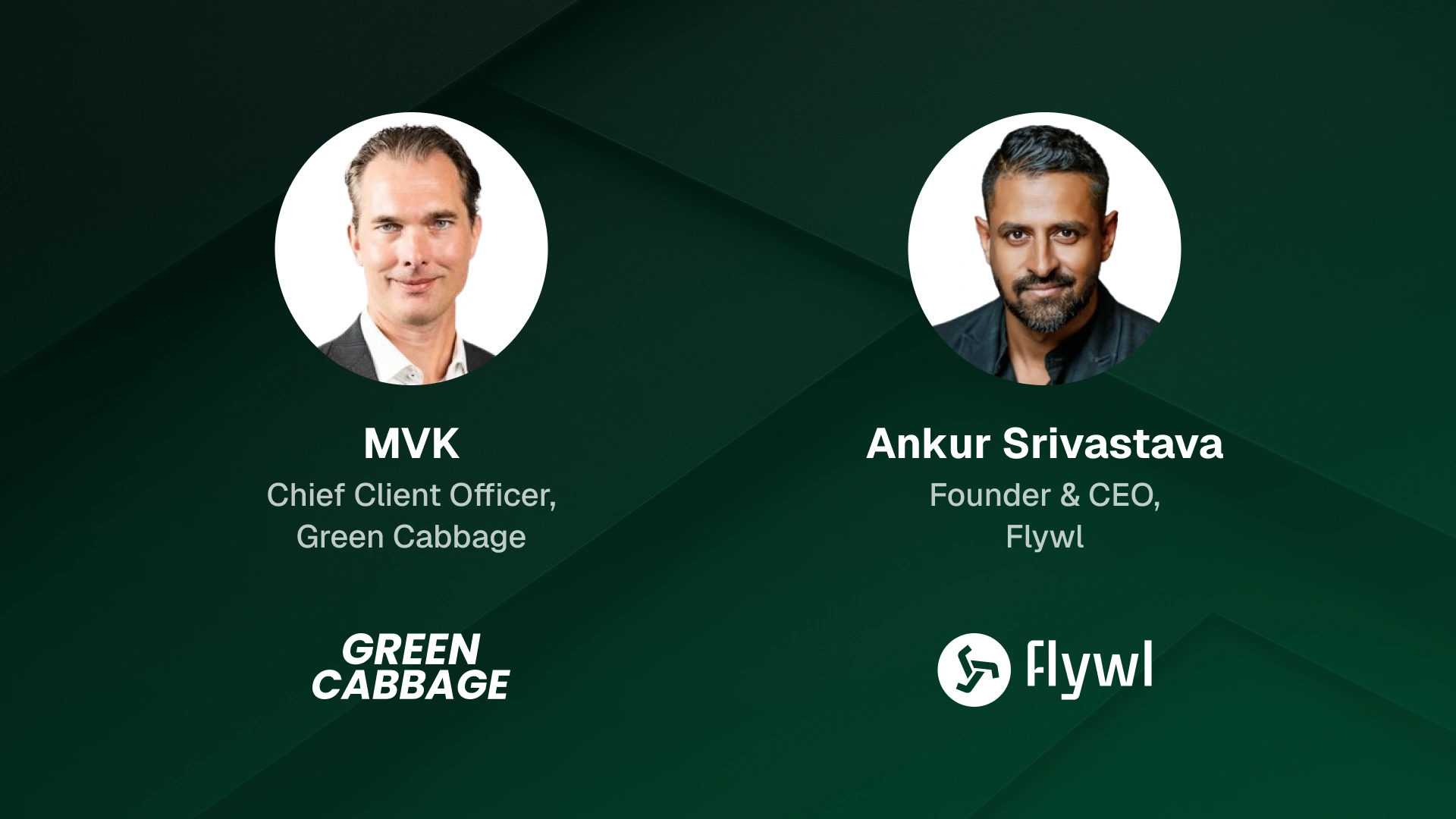
According to Michael Van Keulen (a.k.a. “MVK”), former CPO at Coupa and Lululemon, now Chief Client Officer at Green Cabbage, this pattern isn’t an edge case at all. It’s become the norm.
In a recent session, MVK joined Flywl CEO Ankur Srivastava to talk openly about why procurement keeps getting cut out of cloud decisions, what it’s costing, and what the best teams are doing to reverse it.
Key takeaways:
- Most cloud commitments are still being signed by the CTO/CFO. Then procurement finds out after the fact and inherits the consequences.
- Overrunning your commitment isn’t a flex. Every dollar above what you committed is a dollar that could have earned a deeper discount.
- Marketplace transactions need the right controls. Without them, you lose audit trails, GL visibility, and the governance that CFOs will eventually come looking for.
- Procurement has real leverage in cloud negotiations. But only if they’re in the room before the deal is signed, not after.
- Admit what you don’t know, and ask for help. The mindset shift isn’t purely strategic, but fundamental too.
The same procurement pattern, playing out again
Procurement’s been here before. SaaS snuck in through the side door, then cloud infrastructure happened the same way. CTOs and CFOs struck deals with hyperscalers, locked in multi-year commitments, and forgot to loop procurement in. Now AI is doing it again.
“Every industry continues to believe they can bypass procurement and have this wild, wild west... until procurement all of a sudden sees how big these cost structures are. And they have to step back in to curtail it.” — Ankur Srivastava
The result is a function that keeps getting called in to clean up, rather than one that was there to prevent things. Procurement ends up managing on-prem, SaaS, cloud infrastructure, cloud marketplace, and now AI spend. Simultaneously, reactively, and without the visibility to do any of it well.
The window to change that dynamic is right now, before AI spend compounds the problem further.
What it actually costs to negotiate cloud deals blind
Cloud commitments are typically three-to-five year deals. Get the sizing wrong (in either direction) and the consequences follow you for the length of that contract. MVK was pretty direct about what undercommitting looks like:
“It means I've left money on the table. It means I haven’t gotten the discounts and I haven’t gotten the pricing that I could have had.” — MVK
Overcommitting is another problem. He described the conversation no CPO wants to have: explaining to a CFO that a four-year, $200M commitment should have been $40M, with $40M still sitting unspent on the shelf.
What makes cloud deals uniquely hard to size are their complexity. Demand forecasting for cloud infrastructure, especially in an AI-accelerated environment, doesn’t work like buying seats or fixtures.
MVK described the challenge at Coupa: managing a high-growth infrastructure that had become inefficient over time, trying to model future consumption against new products, new features, and growing teams.
What most teams miss, Ankur argued, is that the commitment conversation isn’t a one-time call at the start of a contract. He described a scenario where a company claims they “never miss their commit,” but on closer inspection, they committed to $10M, spent $15M, and ran another $7.5M through marketplace on top of that.
“That additional $7.5M over three, four, five years would have had a variability on your discount schedule that you didn't incorporate.” — Ankur Srivastava
Their overrun wasn’t celebrated at the sign of contract. It shouldn’t be at renewal either.
Marketplace transactions without controls are a liability
Most teams that have transacted through cloud marketplace have done it once, maybe twice, and often under pressure. MVK described a common experience:
“I had to ask for a lot of favors. Didn't really get a lot of kudos... these deals need to be done by the end of the week. And we're all under pressure.” — MVK
So they go direct with the vendor instead, or they push it through the marketplace manually and hope that someone in FinOps accepts the private offer.
The controls that CPOs need — governance, compliance, GL account visibility, cost center allocation, chargeback, three-way match — weren’t built into the marketplace experience. Ankur was clear about what that meant:
“Running that PO through your entire process, and then ultimately buying it through a marketplace... requires some back-of-the-house rework.” — Ankur Srivastava
This is where Flywl comes in. It’s built for what MVK described as the missing vehicle: a way to transact through marketplace that preserves procurement controls, routes spend to the right hyperscaler based on existing commitments, surfaces cloud incentives, and brings the transaction back into the ERP system for chargeback and reconciliation.
Procurement’s insurance policy is being left on the table
One of the most concrete points in the conversation was also one of the least understood: marketplace drawdown as a hedge on cloud commitments.
Ankur broke it down. If a company commits to $100M with AWS, they're effectively setting aside guaranteed compute. In exchange, AWS extends a marketplace drawdown, or the ability to apply third-party software spend toward burning down that commitment. On AWS, that drawdown is up to 25% of the committed amount. On GCP and Azure, it can reach 100%.
“If you're a CTO or a CFO and you made a commitment together, and you didn't bring the CPO in, you basically forgot to calculate the insurance policy that they would have been able to enact.” — Ankur Srivastava
The CPO, brought into the commitment early, can use that drawdown to cover 25% of the commitment before the business runs a single dollar of compute. That's meaningful leverage. But it only works if procurement is at the table when the commitment is being structured, not after it's already been signed.
Procurement’s moment starts with a mindset shift
Both MVK and Ankur pushed back on the idea that cloud is simply an IT or FinOps problem that procurement can't own. The data arguments and leverage exists. What's missing, more often than not, is the internal standing to act on them.
MVK laid out what’s required:
“I'm not talking about a seat at the table because that's an old discussion. I'm tired of that. It's about procurement maturity. Are we involved at the right time? Are we part of three-year, five-year strategic planning?” — MVK
Procurement maturity, in his words, means being involved at the point of ideation, when the company is deciding where to grow, what to build, what cloud infrastructure that requires. Not when the contract is already drafted.
Ankur added on about the human element to it all. The procurement leaders who make the most progress are the ones willing to surface what they don't know.
“It starts with one thing that I think we fear a lot in the corporate world... vulnerability. It's the act of saying, I don't know. It's the act of saying, I want help.” — Ankur Srivastava
That willingness, he argued, is what allows Flywl to actually help. The movement Ankur is described is procurement finally getting its “revolution.” The same kind that finance, legal, and HR have already had.
Winning back the battle with Flywl
Flywl helps procurement and cloud ops teams get visibility into their commit picture and start routing software spend through marketplace the right way.
If your cloud commitments are running in the background with no one actively managing them, or if you're finding out about deals after they're already signed, book a demo.
FAQ
What is cloud marketplace procurement?
Cloud marketplace procurement is the process of purchasing third-party software through a hyperscaler marketplace like AWS, Azure, or GCP instead of buying directly from a vendor. Purchases made this way count toward a company's existing cloud commitment, which can reduce costs, simplify contracting, and give procurement teams the audit trails and controls they lose when buying direct.
What is a cloud commitment?
A cloud commitment is a multi-year contract with a hyperscaler like AWS, Azure, or GCP where a company agrees to spend a set amount in exchange for discounted pricing. Commitments typically run three to five years and are paid month-to-month. Undercommitting leaves discounts on the table; overcommitting creates shortfall exposure that weakens your position at renewal.
What is cloud marketplace drawdown?
Cloud marketplace drawdown is the portion of a cloud commitment a company can satisfy by purchasing third-party software through a cloud marketplace, rather than spending on compute alone. On AWS, marketplace spend counts toward up to 25% of a committed amount. On GCP and Azure, it can reach 100%.
What is a private offer in AWS Marketplace?
A private offer in AWS Marketplace is a custom pricing agreement negotiated directly between a buyer and a seller, then transacted through the marketplace. It allows both parties to agree on price, terms, and contract length outside the standard listing, while still routing the transaction through AWS so it counts toward the buyer's cloud commitment. For procurement teams, accepting a private offer is typically how a marketplace deal closes.
What does it mean to right-size a cloud commitment?
Right-sizing a cloud commitment means forecasting actual cloud and software consumption over the life of a contract and committing to a number that reflects real demand. It requires cross-functional alignment between procurement, cloud ops, and finance and ongoing monitoring throughout the contract, not just at signing.