Levelling the cloud and AI commitment - usage gap
Flywl ProcureOps compared with spend, ITSM, AI provider and cloud native tools. Eight capabilities. Seven tool categories. One question: who actually closes the loop?
TL;DR: Why cloud and AI spend needs one control plane
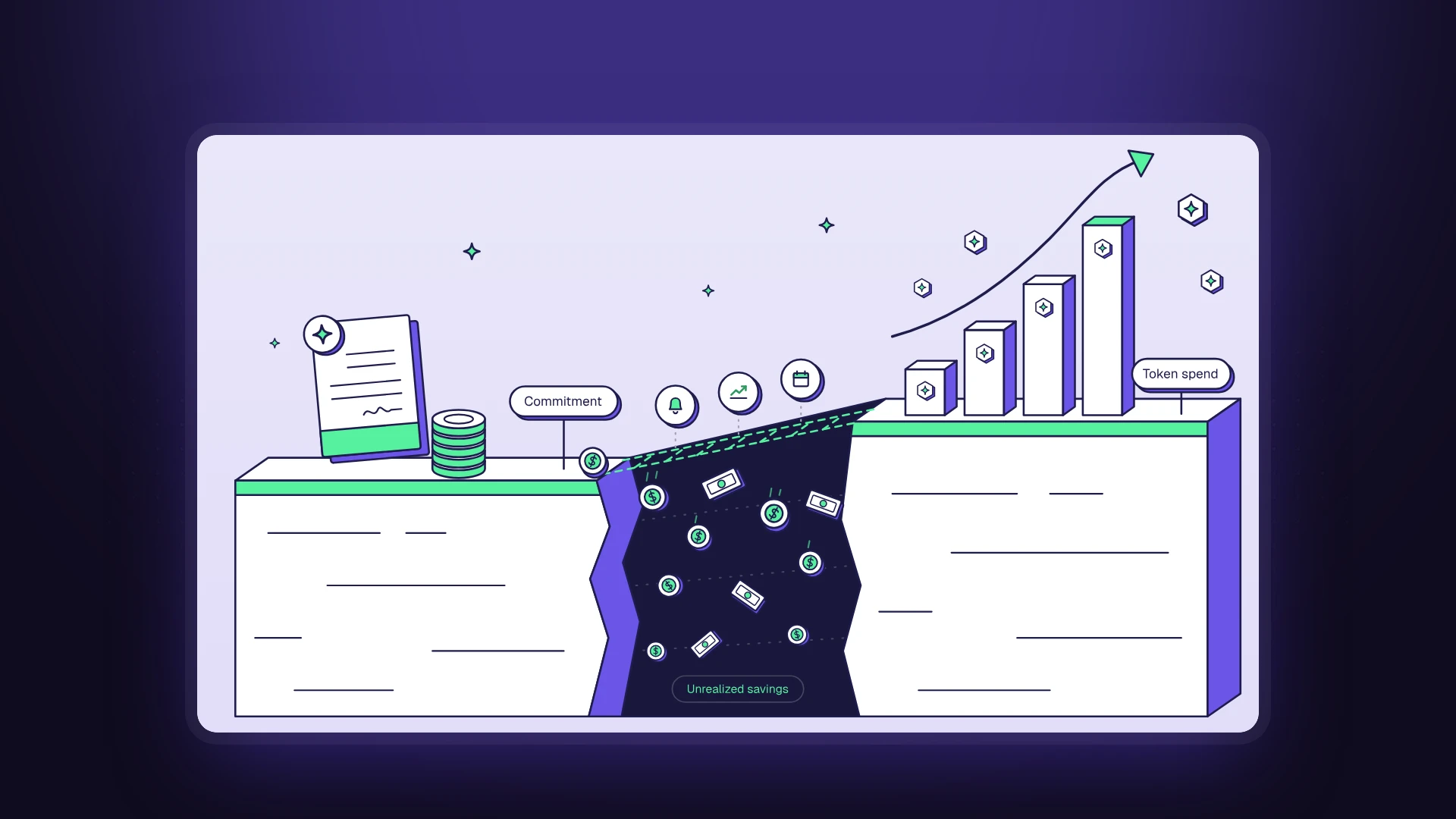
Enterprises sign multi-year cloud commits. AWS EDPs. Azure MACCs. GCP commitments. The contract is fixed. Consumption is not. This is a reality that hits companies not just across their cloud commits but also their SaaS commitments. This reality is hitting them harder with AI tool token usage like OpenAI and Anthropic.
Today, spend platforms see invoices. ITSM platforms see assets and workflows. AI providers see their own tokens. Cloud native tools see one cloud.
The right people lack visibility and so cannot act on it.
Flywl's ProcureOps does both. It understands terms embedded in the static contract, whether it is your PPA on, say AWS or a commit on tools like Claude, Snowflake etc.; it then monitors consumption against the commit down to the product, service or model. It maps both the data points and recommends corrective action. You can transact through the marketplace so that the fix counts toward the commit.

8 of 8
capabilities covered in full by ProcureOps

3
hyperscaler marketplaces, one view

Up to 30%
net savings on cloud spend and commits
The problem: annual contracts, daily consumption
A commit is a forecast you're legally bound to. Miss low and you pay a shortfall for capacity you never used. Miss high and you pay on-demand rates on everything above the line.
Both failures are visible early. In the meter. Not in the invoice.
Three shifts make this harder every quarter:
Consumption pricing is everywhere. AI, Data platforms, observability, security. A single team can double a line item in a month without a purchase order.
AI spend is new and fragmented. Teams call multiple model providers. Costs vary by model, by an order of magnitude. Finance usually sees one card charge per vendor.
Marketplace is a procurement channel. Software bought through AWS, Azure or GCP Marketplace can retire committed spend. Most enterprises leave that lever unused because the people who track the commit aren't the people who buy the software.
The commit gap is the distance between what you committed, what you're consuming, and what you can still route through the marketplace before renewal.
The landscape
We mapped five categories of tools buyers already own or evaluate. Each is good at what it was built for. None were built to connect the data and act.
Spend management (Ramp). Strong on cards, bills and SaaS visibility. Reaches into usage products and AI model spend. No hyperscaler commit tracking.
HR and IT platforms (Rippling). Strong on employees, devices and app access. Some workflow automation. Not a cloud spend tool.
ITSM (ServiceNow). Full coverage on hyperscaler usage and commit tracking. Partial on most of the rest. Can't transact through the marketplace.
AI provider token management (OpenAI, Anthropic). Usage and limits for their own models. By design, single vendor.
Cloud native cost tools. Each hyperscaler's own cost explorer and commit views. Deep in one cloud. Blind to the other two, and to SaaS and AI spend outside them.
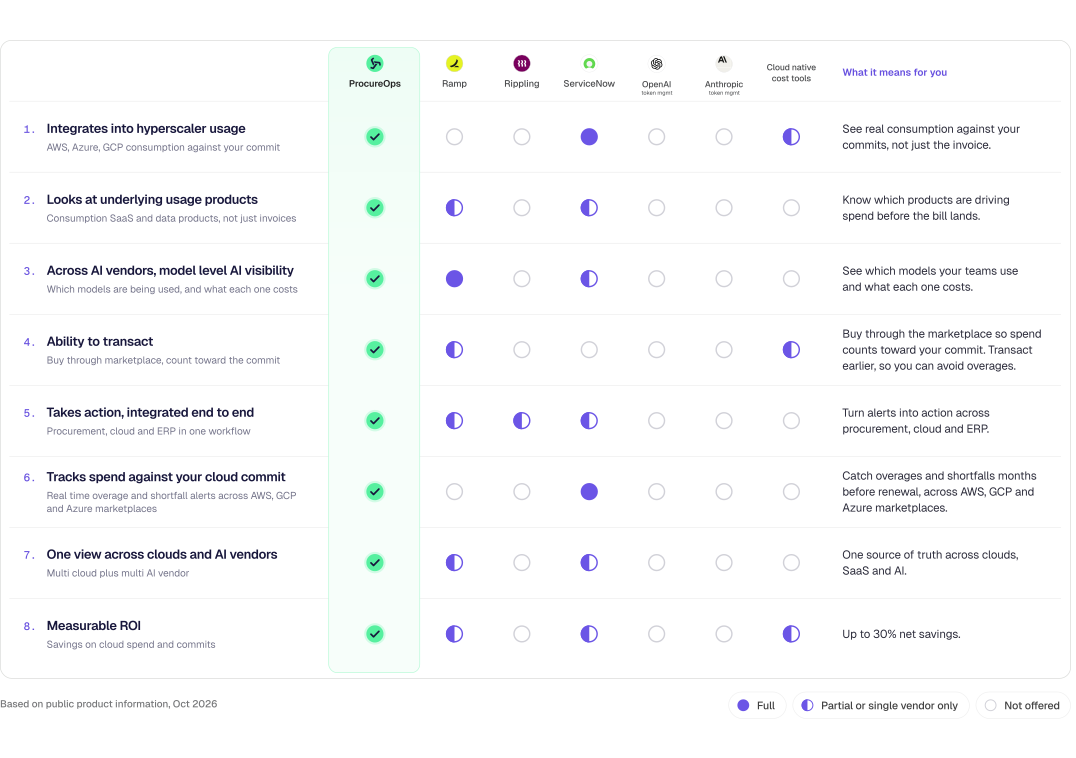
Eight capabilities that matter
The matrix compresses a lot. Here's what each row means, and where the usual tools fall short.
1. Integrates into hyperscaler usage
Pulls actual AWS, Azure and GCP consumption and sets it against the commit you signed. Not the invoice. The meter.
The usual gap: Most tools start at the invoice. By then the month is closed.
2. Looks at underlying usage products
Breaks spend down to the consumption SaaS and data products driving it. Snowflake, Databricks, Datadog and the rest.
The usual gap: Invoice-led tools see a vendor total. They can't tell you which workload moved it.
3. Model level AI visibility, across vendors
Shows which models your teams call, and what each one costs, across every AI provider you use.
The usual gap: AI provider consoles see their own tokens only. One vendor, one view.
4. Ability to transact
Routes software purchases through AWS, Azure or GCP Marketplace so the spend retires your commit. Flywl acts as seller of record.
The usual gap: Monitoring tools can tell you the commit is short. They can't move the purchase that closes it.
5. Takes action, integrated end to end
Connects procurement, cloud and ERP. An alert becomes a purchase order, a reallocation or a renewal decision, in one workflow.
The usual gap: Most platforms stop at the alert. Someone still has to cross three systems by hand.
6. Tracks spend against your cloud commit
Real time overage and shortfall alerts across all three marketplaces. Months before renewal, not weeks.
The usual gap: Commit tracking usually lives in a spreadsheet owned by one person.
7. One view across cloud, SaaS and AI vendors
Multi-cloud, multi- tool plus multi-AI vendor, in one model of spend.
The usual gap: Each tool covers a slice. The CFO gets five reports that don't reconcile.
8. Measurable ROI
Savings on cloud spend and commits, measured against what you would have paid.
The usual gap: ROI that isn't tied to the commit is hard to defend at renewal.
Who should care, and why
The commit gap doesn't belong to one team. It sits between six of them. Each owns a piece of the problem. No one owns the whole thing.
CFO
Owns the commitment as a financial liability.
- Why they should care
- A shortfall is a write-off. An overage is unbudgeted spend. Both surface too late to fix in the current quarter.
- What they get
- Commit burn-down across AWS, Azure and GCP, measured ROI, and a forecast the board can trust.
Matrix rows that matter most: 6, 8
CIO / CTO
Owns the cloud and AI estate.
- Why they should care
- Teams adopt new consumption products and model providers faster than governance can follow. Every tool reports a different number.
- What they get
- One view across clouds, SaaS and AI vendors. Visibility down to the product and the model.
Matrix rows that matter most: 1, 3, 7
Head of Procurement
Owns vendor contracts and the buying process.
- Why they should care
- Marketplace purchasing can retire committed spend, but procurement rarely sees the commit. Purchases get routed direct and the lever goes unused.
- What they get
- Ability to transact through the marketplace, with Flywl as seller of record, so every eligible purchase counts toward the commit.
Matrix rows that matter most: 4, 5
FinOps lead
Owns cost allocation and optimization.
- Why they should care
- Cloud native tools go deep in one cloud. Everything outside it, including AI tokens and consumption SaaS, sits in another spreadsheet.
- What they get
- Consumption by product and by model, overage and shortfall alerts, and a workflow that ends in action rather than a ticket.
Matrix rows that matter most: 2, 3, 6
VP Engineering / Platform
Owns the workloads that drive consumption.
- Why they should care
- Gets asked to explain spikes after the invoice lands. Rarely has a view of the commit the spend is burning against.
- What they get
- Early warning at the product and model level, before finance asks.
Matrix rows that matter most: 2, 3
Controller / FP&A
Owns the forecast and the close.
- Why they should care
- Commit spend, marketplace spend and direct spend reconcile across three systems by hand.
- What they get
- Procurement, cloud and ERP in one workflow, and one source of truth at close.
Matrix rows that matter most: 5, 7
What it looks like in practice
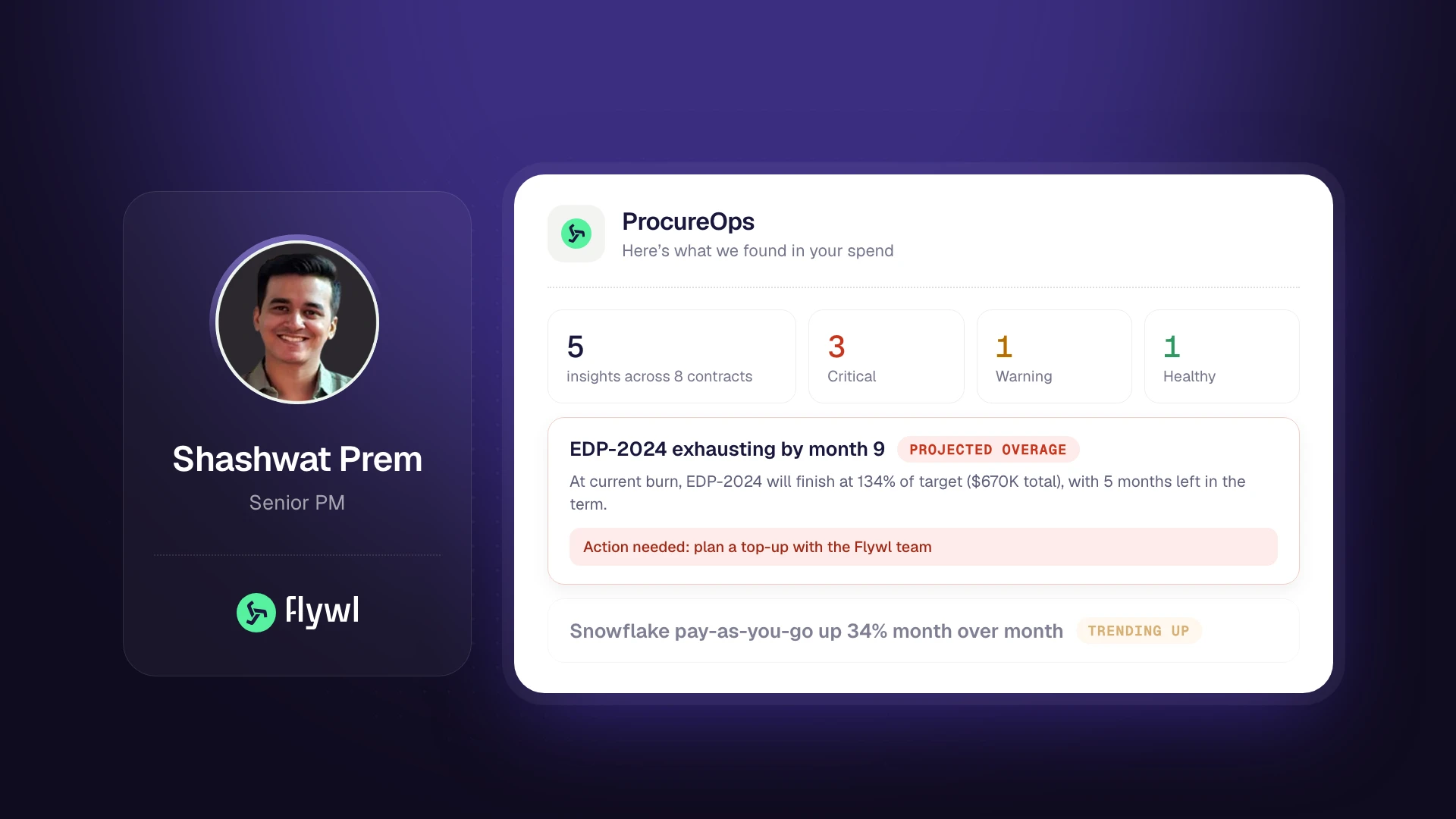
Here is a live case study breaking down the procureOps way of operating. A buyer signed a $1.2M Snowflake commitment. Usage was trending to $4.8M. Nobody had flagged it. The invoice still looked normal.
ProcureOps caught the trend in consumption, not billing. The team corrected course and landed at $1.6M.
$3.2M avoided. On one product. Before renewal.
That's the pattern. See it in the meter. Act through the marketplace. Count it toward the commit.
Questions to ask any vendor
Use these in your next evaluation. They separate reporting tools from a true control pane.
- Does it read consumption from all three hyperscalers, or invoices from one?
- Can it show spend by consumption product and by AI model, across vendors?
- Does it track burn-down against each commit, with overage and shortfall alerts?
- Can it transact through AWS, Azure and GCP Marketplace so purchases retire the commit?
- When it raises an alert, what happens next? Who has to touch which system?
- How is ROI measured, and is it tied to the commit?
- How long to first value? Days, or a quarter-long implementation?
Live in minutes
Set up on all of this with Flywl in minutes, not months. Integrated with the three cloud marketplaces your commits already live in.